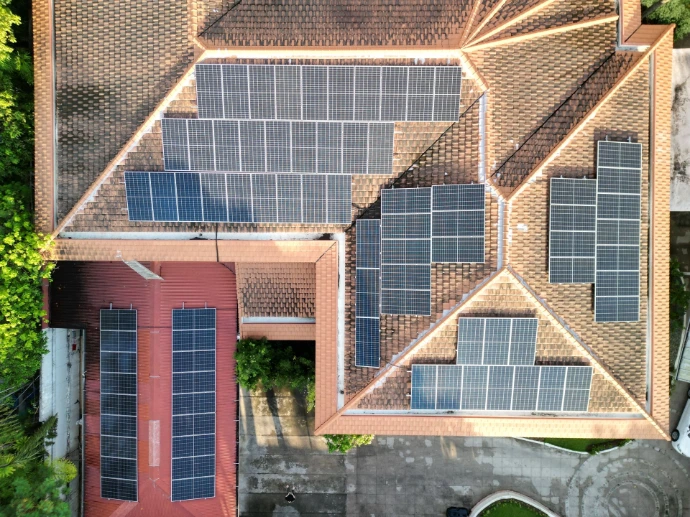
1.2 MWp installed across
the Philippines
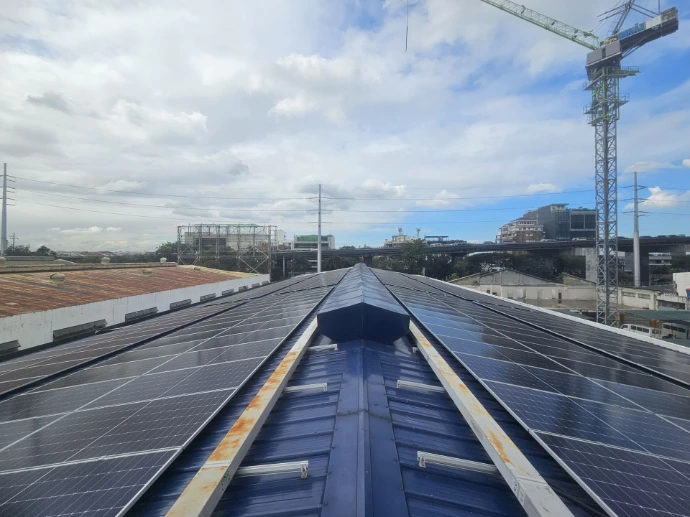
Forty-three projects across residential rooftops, industrial facilities, and branch networks. Every one of these was sized against the client's actual consumption and installed by our own engineering team.
Track Record
Proven across the Philippines
1.2 MWp
Installed Capacity
Residential rooftops through to industrial arrays.
43
Projects Delivered
Homes, factories, and multi-site branch networks.
₱10M+
Annual Client Savings
Based on actual output at prevailing Meralco rates.
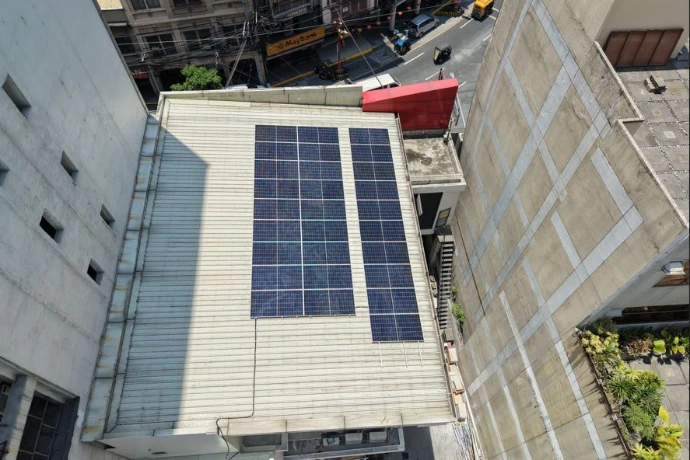
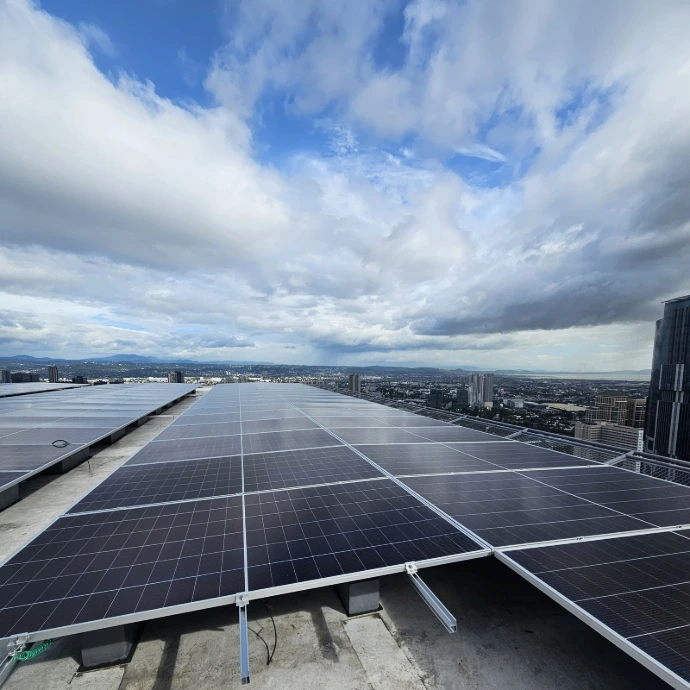
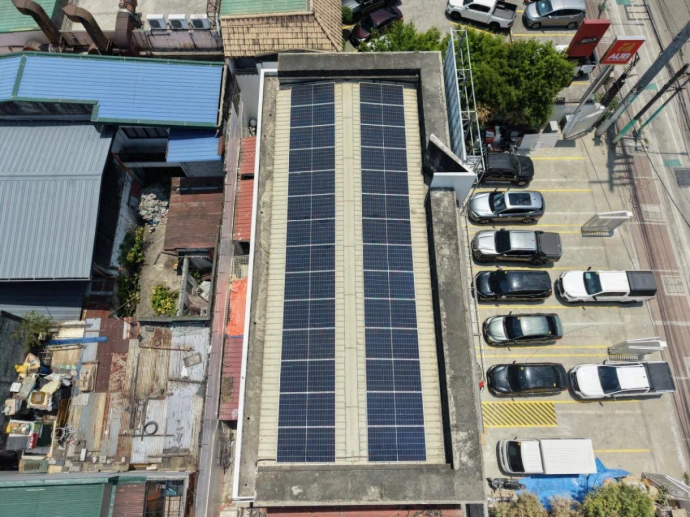
79.92 kWp On-grid Commercial - Ortigas
The situation — High-rise commercial building. The owner wanted to bring down operating expenses without disrupting tenants or building operations.
What we installed — A 79.92 kWp array of 111 bifacial panels on a three-phase on-grid inverter configuration. The roof deck was flat, so we used a ballasted mounting system — the array is held by weight rather than fixings, so there are no penetrations through the waterproofing membrane. Because bifacial panels generate from the rear face as well as the front, the owner coated the roof deck in a high-reflectance finish to increase the light reaching the underside of the array.
The result — The system now offsets around 15% of the building's total electricity consumption, cutting monthly operating costs. The ceiling here was roof area rather than demand: the building's load is large relative to its available deck, so we sized the array to what the roof could carry properly rather than compromising the layout to chase a bigger headline number.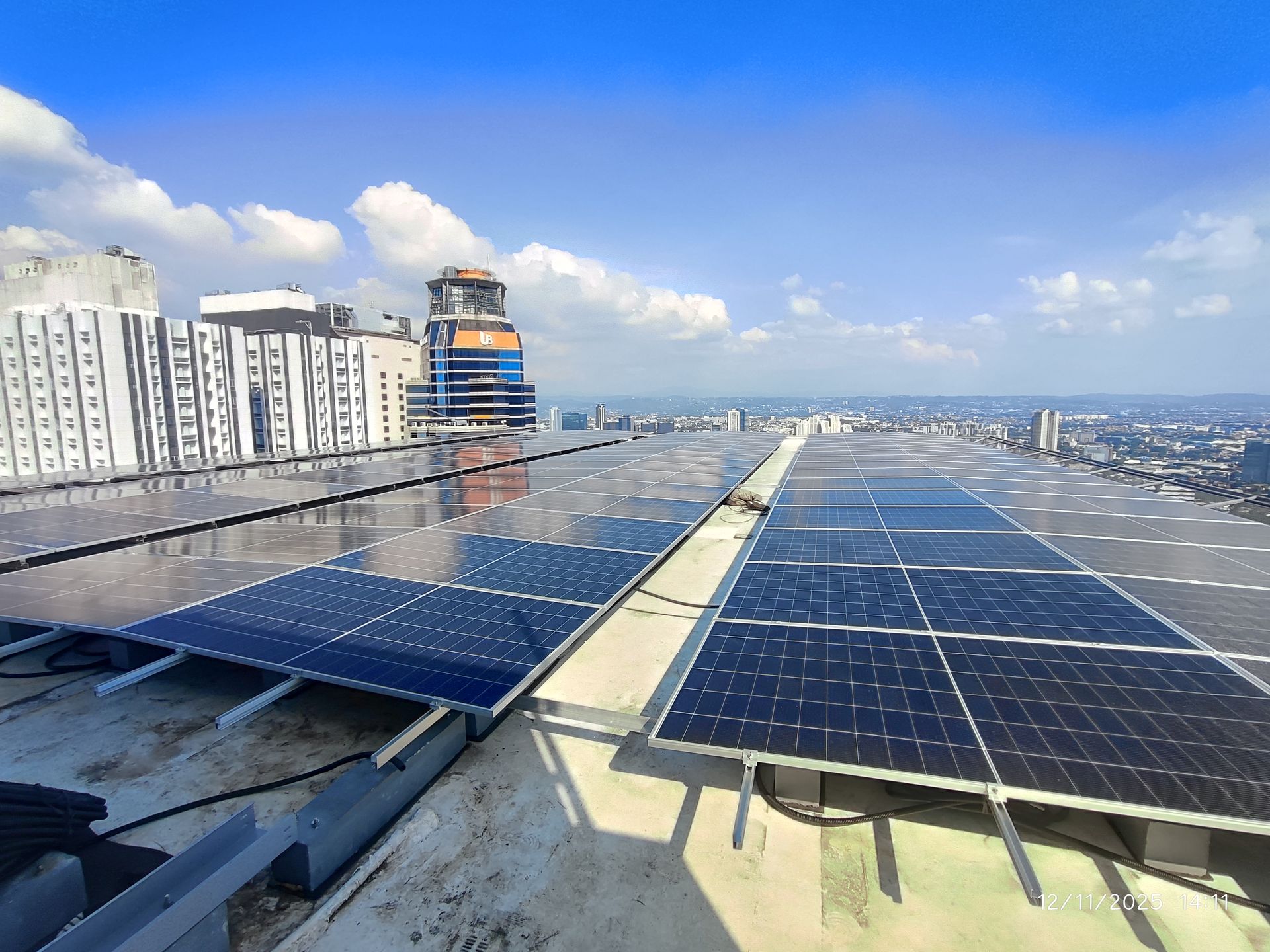
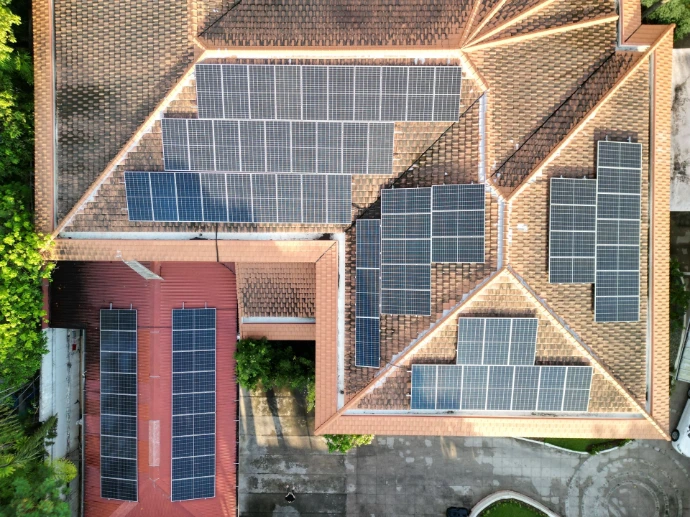
42.9 kWp Hybrid Residential - Makati City
The situation — The client's household was consuming roughly 4,000 kWh a month, at a cost of close to ₱50,000. With Meralco rates climbing steadily and no sign of that reversing, they decided not to wait.
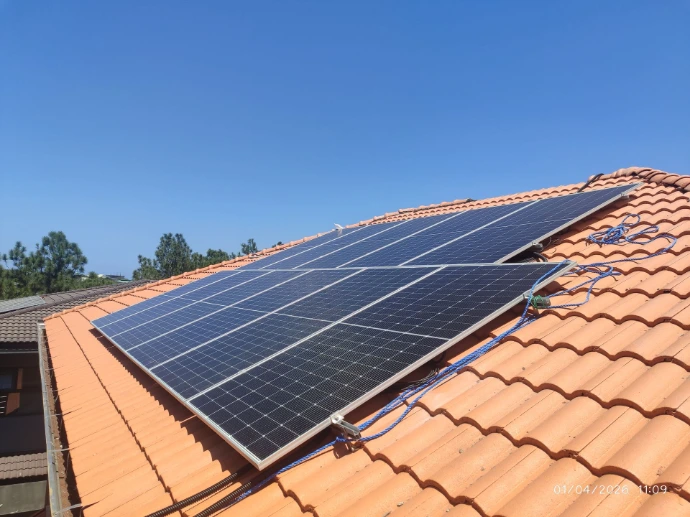
What we installed — A 42.9 kWp array of 77 panels running on a three-phase hybrid inverter configuration with a LiFePO4 backup of 67.2 kWh (@80% Depth of discharge). The roof was tiled, so we used under-tile hooks rather than through-fixings — no penetrations, and no new leak points in the roof structure.
The result — The first full month after commissioning, the bill fell from around ₱50,000 to about ₱12,000 — a reduction of roughly 76%. Rates have risen since, so the system now offsets more in pesos than it did on day one. At the ₱16.49/kWh this household is currently billed, the avoided cost is in the region of ₱50,000 a month.